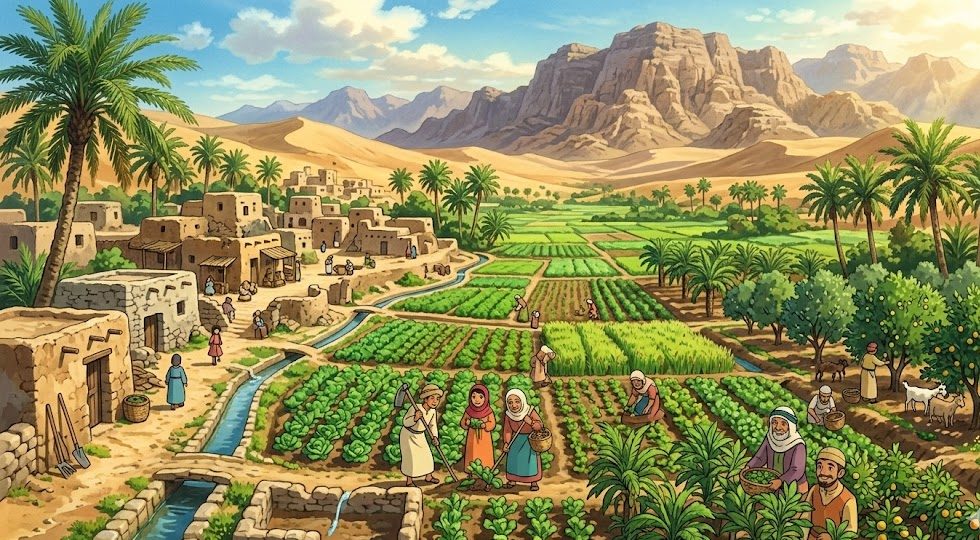
Could you imagine growing a lush, productive harvest in a place where the temperature routinely hits 45°C and rainfall is a rare luxury? It sounds like a mirage, but desert agriculture is one of the fastest-growing frontiers in modern farming. As of 2026, nearly one-third of the Earth’s land surface is classified as arid or semi-arid, yet these regions are increasingly being looked at to feed a global population expected to hit 10 billion.
The “Challenge” for any grower in a desert climate is the harsh combination of high evaporation rates, sandy or alkaline soils, and extreme thermal stress. Conventional crops like lettuce or standard corn simply can’t survive these “Pain Points” without astronomical water costs. However, the “Main Concept” for success isn’t about fighting the desert; it’s about choosing specialized, resilient crops that evolved to turn intense sunlight and dry air into a competitive advantage.
In this comprehensive guide, we will explore the best-performing crops for arid zones, the fundamentals of desert-specific cultivation, and a practical roadmap to help you transform sun-scorched earth into a profitable, green oasis.
Understanding Desert Agriculture: Key Concepts and Importance
To master desert farming, one must first understand that “dry” does not mean “dead.” Desert agriculture relies on Xerophytic principles—the use of plants that have adapted physically and chemically to conserve water. Historically, civilizations like the Nabataeans in Petra or the Hohokam in the American Southwest managed to feed thousands by mastering water harvesting and selecting crops that thrived in the heat.
Think of desert farming like energy management rather than just watering. In a temperate climate, a plant is like a house with all the windows open; it lets moisture escape freely. A desert-adapted crop is like a highly insulated eco-home. It uses thick waxy cuticles (leaves) to trap moisture, deep taproots to find hidden water tables, and sometimes even a specialized type of photosynthesis called CAM (Crassulacean Acid Metabolism), which allows the plant to “breathe” only at night when it’s cool.
Modern relevance is higher than ever. With desertification expanding globally, mastering these “survivor” crops is no longer a niche skill; it is a vital part of future food security. By utilizing the intense solar radiation of the desert, farmers can actually achieve faster growth rates than in cloudy regions, provided they select the right biological partners.
Why It Matters: The Top Benefits of Desert-Adapted Crops
Choosing crops specifically for the desert environment offers significant advantages that standard “supermarket” varieties cannot match.
- Extreme Water Efficiency: Crops like Tepary Beans and Sorghum can produce a full harvest with up to 60% less water than standard legumes or grains. They are biologically programmed to “wait out” dry spells without dying.
- Reduced Disease Pressure: The low humidity of the desert is a natural fungicide. Many common agricultural blights that devastate crops in tropical or temperate zones simply cannot survive the dry, UV-rich desert air, reducing the need for chemical sprays.
- High Solar Conversion: Desert crops are “sun-hungry.” Because there is rarely cloud cover, plants like Date Palms and Prickly Pear (Opuntia) convert a massive amount of solar energy into fruit and biomass, often outperforming the caloric output of temperate crops per square meter of sunlight.
- Economic Opportunity in Marginal Land: Desert land is often significantly cheaper than prime agricultural land. By successfully growing high-demand crops like Pomegranates or Jojoba, farmers can see a much higher Return on Investment (ROI) due to lower land acquisition costs.
Pro Fact: The Date Palm is often called the “Tree of Life” in desert regions because it can tolerate soil salinity levels that would kill almost any other fruit tree, while a single tree can produce up to 100kg of fruit annually for over 60 years.
How to Get Started: A Practical Guide for Beginners
Transitioning to desert cultivation requires a shift from “traditional” gardening to “strategic” ecosystem management. Here is a 5-step plan to get your desert farm started.
1. Site Analysis and Windbreak Installation
Before you plant your first seed, you must stop the wind. Hot desert winds act like a hair dryer on your plants. Planting a perimeter of Saltcedar or hardy Acacias creates a microclimate, reducing evaporation rates within your plot by up to 30%.
2. Select Your “Primary Resilient” Crops
Start with the “Big Three” of desert agriculture:
- Trees: Date Palms, Pomegranates, and Figs.
- Grains/Legumes: Pearl Millet, Sorghum, and Tepary Beans.
- Succulents: Dragon Fruit and Prickly Pear (Opuntia).
3. Implement Sub-Surface Drip Irrigation
Standard sprinklers are useless in the desert because most of the water evaporates before it hits the ground. Use sub-surface drip lines that deliver water directly to the root zone, capped with a thick layer of organic mulch to keep the soil cool.
4. Soil “Bio-Priming”
Desert sand lacks organic matter. Instead of dumping synthetic fertilizer—which can “burn” plants in the heat—focus on Biochar and Compost. These materials act like a sponge, holding onto water and nutrients that would otherwise leach through the sand.
5. Time Your Planting Windows
In the desert, there are usually two growing seasons: the “shoulder seasons” of early spring and late autumn. Avoid planting sensitive seedlings in the dead of summer. Use shade cloths (30-50% density) to protect young plants from the mid-day “UV blast.”
Beginner’s Tip: Always water your desert crops at dusk or night. This allows the plant 8 to 10 hours of cool temperatures to absorb moisture into its cellular structure before the sun starts pulling it back out.
Overcoming Challenges and Looking into the Future
The two greatest hurdles in desert farming are Soil Salinity and Pollination Stress. Over-irrigation in the desert can cause salts to rise to the surface, eventually poisoning the soil. The solution is “deep leaching” occasionally and choosing salt-tolerant species like Barley or Sugar Beets. Furthermore, extreme heat can sometimes “sterilize” pollen. Farmers are now using heat-tolerant bee species and robotic pollinators to ensure fruit sets even during heatwaves.
Future Trends: We are seeing a massive surge in Agrivoltaics—the practice of installing solar panels high above desert crops. The panels provide much-needed shade for the plants, reducing their water needs, while the transpiration from the plants cools the solar panels, making them more efficient. It is a perfect “symbiotic” technology for the 21st-century desert.
Conclusion
Farming in the desert is not a battle against the elements; it is an exercise in biological harmony. By choosing crops like Date Palms, Millets, and Pomegranates, and by mastering water-retention techniques, you can turn a “barren” landscape into a high-yielding asset.
The desert offers more sunlight than anywhere else on Earth—and sunlight is the primary fuel for all life. If you can manage the water, the desert will reward you with growth rates and fruit quality that temperate farmers can only dream of.
Would you like me to help you design a specific “Succulent-Based” orchard layout for an arid backyard or small-scale farm?
FAQs
Q1: Is it expensive to start a farm in the desert? While land is cheaper, the initial cost of irrigation infrastructure (drip systems and solar pumps) is higher. However, these costs are typically offset by lower pesticide requirements and higher yields of premium sun-ripened fruits.
Q2: Can I grow standard vegetables like tomatoes in the desert? Yes, but they require shade structures and high-frequency irrigation. It is usually more profitable and easier to grow desert-native “wild” tomatoes or cherry varieties that have higher heat tolerance.
Q3: How do I deal with the high salt content in desert soil? Incorporate Gypsum into your soil to help flush salts downward and prioritize “Halophytes”—plants that actually prefer or tolerate salt, such as Quinoa or Saltbush.
Q4: Which desert crop has the highest profit margin? Currently, Medjool Dates and Dragon Fruit are top performers. They both command high market prices, have long shelf lives, and thrive in temperatures that would kill other fruit-bearing plants.