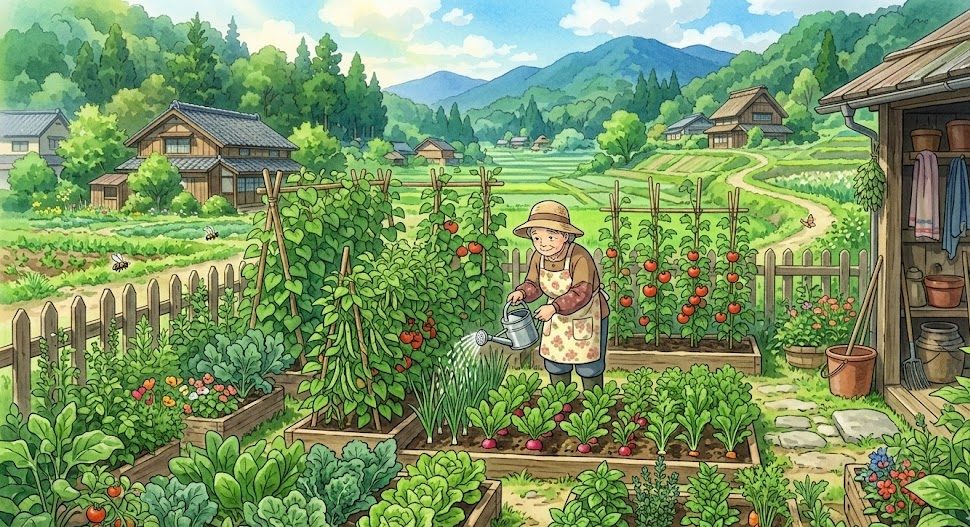
Did you know that you can generate a professional-grade income from a plot of land no larger than a standard backyard? While traditional industrial agriculture requires hundreds of acres to remain profitable, micro farming is proving that in 2026, “small is powerful.” The “Pain Point” for many aspiring farmers today is the astronomical cost of land and the belief that you need a tractor to be a “real” grower. This barrier to entry has kept thousands of talented individuals away from the soil.
The “Challenge” is that most people try to grow the wrong things in small spaces. If you try to grow wheat or commodity corn on a quarter-acre, you will lose money. However, the “Main Concept” of successful micro farming is Value Density. By selecting specific crops that provide high yields in tiny footprints and command premium prices, you can turn a small garden into a high-margin enterprise.
In this guide, you will learn the fundamental principles of high-density cultivation, the top crops that offer the highest return on investment (ROI) for small spaces, and a practical, step-by-step roadmap to launch your own micro-farm. Whether you have a suburban lot, a rooftop, or a small rural patch, this thesis is your blueprint for agricultural success.
Understanding Micro Farming: Key Concepts and Importance
Micro farming is the practice of intensive, small-scale agriculture, typically on land ranging from a tenth of an acre to two acres. Unlike industrial farming, which relies on “economies of scale” (selling vast amounts of low-value crops), micro farming thrives on “economies of intensity.” It is the modern evolution of the “Market Garden,” where every square inch is optimized for productivity.
To understand the technical side, think of micro farming like a vertical server rack versus a giant warehouse. A warehouse spreads things out horizontally and is hard to manage. A server rack (the micro-farm) stacks efficiency vertically and uses precision management to ensure every unit is performing at 100%.
Historically, this was the way humanity fed itself before the industrial revolution. Today, it has regained massive relevance due to the Farm-to-Table movement. Consumers no longer want “plastic” tomatoes shipped from 2,000 miles away; they want hyper-local, nutrient-dense produce. Micro-farmers fill this gap by using Biointensive methods—such as permanent raised beds and close plant spacing—to achieve yields that are 4–10 times higher per square foot than conventional farms.
Why It Matters: The Top Benefits of Small-Space Farming
Investing your time in micro-scale agriculture offers a unique set of benefits that large-scale farming simply cannot provide.
- Ultra-Low Overhead: You don’t need a $200,000 combine. Most micro-farms can be managed with high-quality hand tools, a walk-behind tractor, and a basic irrigation system. This makes the Return on Capital much faster.
- Direct-to-Consumer Margins: Because you are small, you can sell directly to local chefs, at farmers’ markets, or through a CSA (Community Supported Agriculture). This allows you to keep 100% of the retail price, rather than the 15–20% a conventional farmer gets from a wholesaler.
- Minimal Waste and High Agility: Small spaces allow you to monitor every plant. If a pest appears, you see it instantly. Furthermore, you can pivot your crop selection mid-season based on market trends, something a large-scale wheat farmer can never do.
- Environmental Restoration: Micro-farms are almost always Regenerative. By focusing on soil health and composting, you are sequestering carbon and providing a sanctuary for pollinators in urban or semi-urban environments.
Pro Fact: According to The Market Gardener research, a well-managed micro-farm can generate over $100,000 in gross revenue per acre, a figure unheard of in commodity crop agriculture.
The Best Crops for Micro Farming and Small Spaces
Success in small spaces is about choosing High-Turnover and High-Value crops. Here are the top contenders:
1. Microgreens
The undisputed king of micro farming. They can be grown in trays on racks, essentially allowing you to “stack” your farm vertically. They are ready in 10–14 days and sell for $20–$40 per pound.
2. Salad Mixes and Arugula
Quick-growing greens allow for multiple “cuts” per season. They are light, easy to transport, and highly sought after by local restaurants.
3. Gourmet Mushrooms
Mushrooms like Oyster and Lion’s Mane don’t even need soil. They can be grown in bags on shelves in a climate-controlled shed, making them perfect for urban micro-farmers.
4. Heirloom Cherry Tomatoes
Standard tomatoes take up too much space for the yield, but cherry tomatoes produce hundreds of fruits per plant. If grown vertically on strings, they provide a massive “Value per Square Foot.”
5. Garlic and Specialty Peppers
These are high-value “niche” items. Specialty hot peppers (like Habanadas or Ghost peppers) and gourmet garlic varieties command much higher prices than their grocery store counterparts.
How to Get Started: A Practical Guide for Beginners
Launching a micro-farm requires a shift from “hobbyist” to “entrepreneur.” Follow this 5-step plan:
1. Market Research: The “Chef Interview”
Before you plant, visit 3–5 local high-end restaurants. Ask the chefs what they struggle to find fresh. Often, it’s specific herbs, edible flowers, or “baby” vegetables. Grow what is already in demand.
2. Standardize Your Bed System
Don’t just dig holes. Create permanent 30-inch wide raised beds. This width is the industry standard because it allows you to reach the center from both sides without stepping on the soil, which prevents compaction and maintains Soil Aeration.
3. Invest in “Small-Scale” Precision Tools
You need the right “levers” for your small space. Key tools include:
- A Precision Seeder: (e.g., the Jang Seeder) to ensure zero seed waste.
- Broadfork: For aerating soil without flipping it.
- Flame Weeder: For efficient, chemical-free weed management.
4. Implement “Succession Planting”
The moment one crop is harvested, the next should be ready to go in. Never leave a bed empty. In a small space, “time is land.”
5. Build Your Local Sales Channel
Start a “Small-Batch CSA” or a weekly newsletter. People love the story behind their food. Selling the “Experience” of local farming allows you to charge a premium over supermarket prices.
Beginner’s Tip: Avoid “Crop Complexity.” In your first year, master just two or three crops. It is better to be the “Radish King” of your town than to have a dozen different vegetables that are all mediocre.
Overcoming Challenges and Looking into the Future
The biggest hurdle for micro-farmers is Labor Efficiency. Because you aren’t using big machines, you are doing the work by hand. The solution is “Lean Farming”—organizing your wash-and-pack station and your tool shed so that you never waste a step.
Another challenge is Zoning Regulations. Many urban areas are still catching up to the micro farming trend. Always check local bylaws regarding “urban agriculture” and commercial sales from residential zones.
Future Trends: We are seeing a massive shift toward Agri-Tech for Smallholders. Solar-powered weed-zapping robots and smartphone-monitored soil sensors are making it possible to manage a micro-farm with 50% less physical labor. Additionally, Vertical Hydroponics is allowing micro-farmers to move indoors, providing year-round income regardless of the weather.
Conclusion
Micro farming is not just a way to grow food; it is a way to reclaim your independence. By focusing on Value Density, Direct Sales, and Intensive Management, you can turn a small patch of earth into a thriving, profitable engine of health and wealth.
The core message is simple: You don’t need more land; you need more intensity. Every square foot of your property is a potential asset. Start where you are, use what you have, and grow your way to a more resilient future.
Would you like me to help you create a “Profit-Per-Square-Foot” calculation for a specific crop you are considering?
FAQs
Q1: How much land do I really need to make a profit? While it varies, many professional micro-farmers earn a respectable part-time income on just 1,000 to 2,000 square feet. A full-time living is often possible on half an acre if specializing in high-value items like microgreens.
Q2: Is micro farming more work than traditional farming? It is more detail-oriented work. While you aren’t driving a tractor for 12 hours, you are constantly seeding, transplanting, and harvesting. However, because the scale is small, the physical toll is often much lower than industrial farming.
Q3: Can I micro-farm in a city? Absolutely. Urban micro farming is a booming industry. Using rooftops, backyards, and even shipping containers, urban farmers are providing “hyper-local” food to city dwellers and reducing the carbon footprint of food transport.
Q4: What is the most profitable crop for a beginner? Microgreens are generally the easiest way to see a return on investment quickly. They require little space, grow fast, and have a very high market price per pound, making them the perfect “starter crop” for the micro-entrepreneur.